Therapy for Mothers, Working Moms & Postpartum Mental Health in St. Louis, Missouri & Illinois
Support Postpartum Anxiety & Depression, Working Mom Burnout, Maternal Mental Health, Identity Changes, Relationships, & the Emotional Transition to Motherhood
St. Louis, Missouri ● Online Therapy in Chicago & Throughout Missouri and Illinois
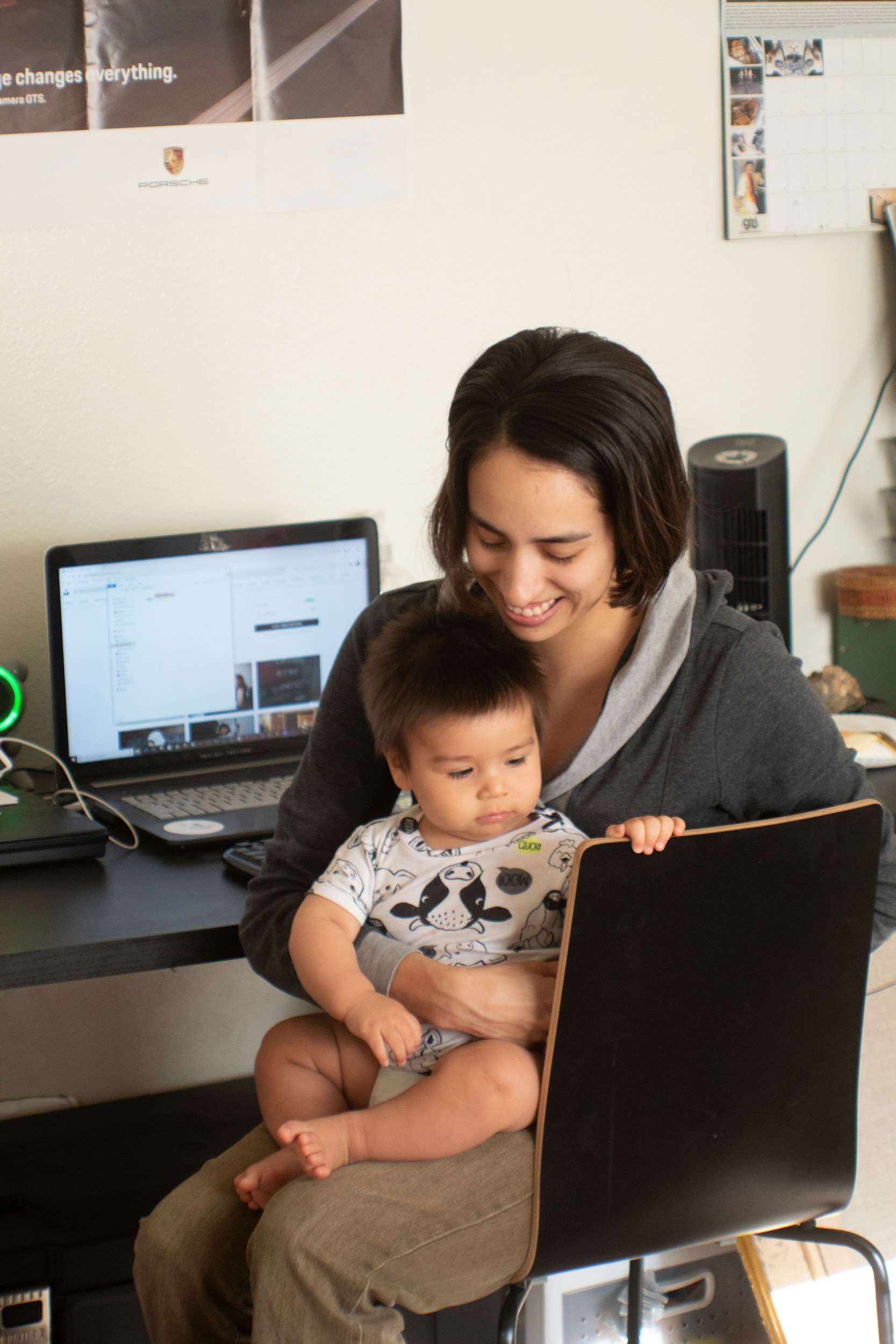

Motherhood Changes You.

Motherhood changes everything—including you.
Motherhood can create a constant tension between caring for the people you love and maintaining a sense of yourself.
‘Perhaps you imagined motherhood would feel natural, joyful, and fulfilling. Instead, you feel anxious, overwhelmed, disconnected, or like you've somehow lost yourself along the way.
Perhaps you're returning to work while carrying the invisible weight of motherhood, wondering how everyone else seems to manage what feels impossible.
Or maybe anxiety, sadness, intrusive thoughts, guilt, or anger have made this season feel far different than you expected.
I provide therapy for mothers and working moms in St. Louis and online therapy throughout Missouri and Illinois who are navigating postpartum anxiety, depression, guilt, burnout, relationship changes, and changes in identity after becoming a mother.

Why Work With Joanna
At the heart of my work is the belief that motherhood deserves to change you—but it shouldn’t require you to lose yourself.
Motherhood is one of life's most profound emotional and psychological transitions.
It can bring joy alongside grief, confidence alongside uncertainty, and deep love alongside overwhelming responsibility.
They say it takes a village to raise a child. I believe mothers deserve a village, too. While therapy can't replace a community, it can become a place where you no longer have to carry everything alone—a place to slow down, feel understood, and reconnect with yourself as you navigate this season of life.
My approach integrates psychodynamic psychotherapy with specialized training in perinatal mental health and evidence-based treatment for anxiety and OCD.
Common Challenges I Help Women Navigate
-

Postpartum Anxiety
Constant worry.
Racing thoughts.
Difficulty relaxing.
Feeling responsible for preventing something terrible from happening.
Always feeling "on."
-

Postpartum Depression
Feeling disconnected.
Persistent sadness.
Emotional numbness.
Loss of joy.
Wondering whether you're failing as a mother.
-

Therapy for Working Moms in St. Louis
Trying to succeed at work while carrying the mental load at home.
Feeling like you're falling short everywhere.
Never feeling fully present.
Constant guilt.
-

Working Mom Guilt / Mental Load
Whether you work outside the home or stay home with your children, guilt often follows.
You worry you aren't doing enough.
You compare yourself to other mothers.
You question every decision.
-

Identity Changes After Motherhood
Feeling like you "lost” yourself.
Not because you hate motherhood, but because so much of who you once were now feels difficult to find.
-

Relationships After Children
The transition to parenthood often changes relationships.
Communication becomes harder.
Resentment grows.
Intimacy changes.
You may feel more like roommates than partners.
Postpartum Anxiety or Postpartum OCD?
Many new mothers experience racing thoughts and constant worry after having a baby. For some women, those thoughts become intrusive, unwanted, and incredibly distressing.
If you find yourself constantly seeking reassurance, avoiding certain situations, checking on your baby repeatedly, or feeling terrified by unwanted thoughts that don't reflect who you are, you may be experiencing postpartum OCD rather than postpartum anxiety alone.
Postpartum OCD is common, highly treatable, and often misunderstood.
As a therapist trained in Exposure and Response Prevention (ERP)—the gold-standard treatment for OCD, I work with women experiencing postpartum OCD, intrusive thoughts, checking, reassurance seeking, and other compulsive behaviors.


Motherhood was never meant to be carried alone.
For generations, mothers were supported by families, neighbors, and communities who shared both the practical and emotional work of raising children. Today, many women find themselves carrying that weight with far less support while feeling pressure to do it all.
Therapy can offer space to understand what motherhood has brought to the surface—not simply how to manage it.
You may understand intellectually that you can’t do everything, yet still feel guilty when you say no. You may know that you need rest but feel uncomfortable when you aren’t being productive. You may love your children deeply while also grieving parts of your identity or relationship that have changed.
Our work can help you understand the emotional patterns beneath anxiety, guilt, perfectionism, resentment, and the pressure to hold everything together.
How Therapy Can Help
Together, we'll work toward:
finding relief from postpartum anxiety and depression
reducing the grip of guilt, perfectionism, and self-criticism
making sense of intrusive thoughts or OCD without fear or shame
navigating the transition into motherhood and returning to work
strengthening communication and connection in your relationships
reconnecting with your identity beyond the roles you carry
developing greater emotional flexibility and self-compassion
Motherhood changes your life.
It shouldn't require you to lose yourself.
Frequently Asked Questions
-
Many women describe motherhood as one of the most meaningful—and most disorienting—transitions of their lives.
You may love your child deeply while also feeling like you've lost parts of yourself.
Your relationships, priorities, routines, career, and sense of identity may all shift in ways you never expected.
That doesn't mean you're failing—it means you're navigating a profound life transition.
Therapy offers a place to make sense of these changes, reconnect with yourself, and discover who you are becoming in this next chapter of life.
-
Absolutely. Many women carry guilt because they believe they should enjoy every moment of motherhood.
In reality, it's possible to deeply love your child while struggling with the demands, exhaustion, identity changes, and emotional complexity of becoming a mother.
These feelings are more common than many women realize, yet they're often experienced in silence.
Therapy offers a nonjudgmental space to explore these emotions honestly, helping you move beyond guilt and toward greater self-understanding and self-compassion.
-
Postpartum anxiety is more than the normal worries that come with becoming a parent.
It often involves persistent worry, racing thoughts, difficulty relaxing, feeling constantly on alert, or a sense that something terrible might happen to your baby or family.
Many women describe feeling unable to "turn their brain off," even when everything appears to be okay.
Postpartum anxiety is common, highly treatable, and does not mean you're a bad mother.
Therapy can help you understand what's happening, reduce anxiety, and move through motherhood with greater confidence and self-compassion.
-
Yes. Many new mothers experience unwanted, intrusive thoughts after having a baby.
These thoughts can feel frightening because they are so inconsistent with who you are and what you value.
Having an intrusive thought does not mean you want to act on it or that you're a danger to your baby.
For some women, however, intrusive thoughts become frequent and are accompanied by compulsions such as reassurance seeking, checking, avoidance, or mental reviewing.
This may be a sign of postpartum OCD, which is highly treatable with Exposure and Response Prevention (ERP).
Therapy can help you understand the difference and reduce the fear these thoughts create.
-
Yes. Therapy can help you better understand the emotional weight of constantly managing your family's needs, set healthier boundaries, and develop more sustainable ways of caring for both yourself and those you love.
-
Many working mothers feel pulled between the demands of work and family, leaving them feeling like they're never doing enough in either role.
Therapy can help you understand where that guilt comes from, challenge unrealistic expectations, and develop a more compassionate relationship with yourself.
-
Many women feel caught between competing expectations.
Therapy can help you understand the unrealistic standards you've internalized while developing a more balanced and compassionate perspective.
-
Yes. The transition to parenthood often changes communication, emotional connection, and relationship dynamics.
Therapy can help you better understand these changes, strengthen communication, and build a more connected relationship with your partner.
Related Resources





REASONS TO BOOK
REASONS TO BOOK
You’re drawn to therapy that goes beyond symptom relief—a space with a curious, reflective, and empathetic therapist who helps you uncover the unconscious origins of your thoughts, feelings, and relational patterns, and understand how they continue to shape your present experience.
CLINICALLY TRAINED

DEEP, INSIGHT-ORIENTED APPROACH
Therapy can be challenging work, and having a skilled, clinically trained therapist by your side makes all the difference. After transforming my own career from attorney to therapist, I completed several years of advanced clinical training at both the St. Louis and Chicago Psychoanalytic Institutes. This depth of training allows me to look beyond symptoms alone, helping you understand the underlying patterns that keep you feeling stuck.

Starting therapy can feel vulnerable. My goal is to make the process feel approachable by creating a space where you feel comfortable being yourself, asking difficult questions, and exploring what matters most to you.